Witch Home: A Street Art Font with Serious Attitude
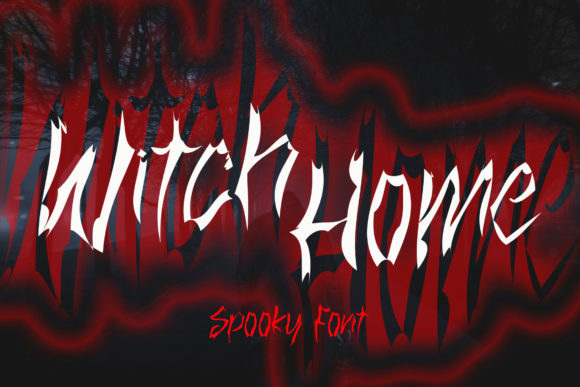
There's a specific energy that comes from raw, urban creativity—the kind you see in a stencil on a brick wall or a bold tag in a back alley. It's immediate, unapologetic, and impossible to ignore. Capturing that same vibe in your digital or print design work is a powerful way to cut through the noise. That's precisely the feeling a typeface like Witch Home brings to the table. This isn't your typical clean, corporate font. It's a creepy-styled display font with a distinct street art vibe, designed for projects that need to make a bold, edgy statement.
More Than Just Letters: The Visual Punch of a Creepy Display Font
What sets Witch Home apart is its unique fusion of styles. It takes the gritty, hand-painted aesthetic of street art and infuses it with a slightly unsettling, almost occult personality. The letterforms are crafted to look weathered, textured, and full of character, as if they were sprayed or stamped onto a surface. This gives it an authentic, handmade quality that many digital fonts struggle to achieve.
As a display font, its primary job is to grab attention in headlines, logos, and short bursts of text. It's not designed for long paragraphs of body copy. Instead, think of it as the visual equivalent of a shout—it's meant to be seen and felt immediately. Its "creepy" aspect isn't about horror-movie gore, but more about a mysterious, alternative, and slightly rebellious undertone. This makes it a fascinating creative font for brands that want to project confidence, uniqueness, and a touch of the unconventional.
Where Does a Font Like This Actually Work?
The practical applications for a typeface with such a strong personality are surprisingly diverse. It's all about matching the font's energy to the project's goals. Here are some real-world scenarios where Witch Home could be the perfect fit:
- Brand Identity & Logo Design: For a craft brewery, a skateboard company, an indie record label, or an alternative clothing brand, this font can become the cornerstone of a memorable brand identity. A logo set in Witch Home instantly communicates a specific lifestyle and attitude.
- Merchandise and Apparel: This is a natural home for it. The street art vibe is perfect for t-shirts, sportswear, hoodies, and hats. It has the kind of impact that works well on fabric, making designs pop from a distance.
- Packaging Design: Imagine this on labels for hot sauces, energy drinks, vinyl record sleeves, or specialty coffee bags. It adds a layer of authenticity and edge that can make a product stand out on a crowded shelf.
- Marketing and Social Media: Use it for bold headlines on social media graphics, event posters for concerts or art shows, or eye-catching advertisements. Its high-impact nature ensures your message won't be scrolled past unnoticed.
- Digital and Editorial Projects: While not for body text, it can create striking chapter titles in a magazine, header graphics for a blog focused on music or urban culture, or title screens for video content.
Integrating a Bold Typeface into Your Design Workflow
Choosing a premium font like this is just the first step. Using it effectively requires a bit of strategy to ensure it enhances rather than overwhelms your project.
Font Pairing is Key: A font with this much personality needs a supporting cast. Pair it with a simple, clean sans serif font for any body copy or supporting text. This creates a necessary contrast, allowing the display font to shine while maintaining overall readability. For example, a neutral sans serif for descriptions will let a Witch Home headline command all the attention.
Test for Context: Always mock up your designs. See how the font looks at the size it will be used. Check its legibility on different backgrounds—light, dark, textured, or photographic. A font that looks great on a white screen might need adjustments when placed over a busy image.
Consider the Message: Does the font's "creepy" and street art aesthetic align with your brand's voice? For a children's party planner, it's probably a mismatch. But for a haunted house attraction, a metal band, or a brand selling alternative art prints, it's a perfect match. The goal is visual consistency across all touchpoints.
The Practical Side: Licensing and Font Files
When you invest in a commercial font, you're not just buying letters; you're buying a license to use them in your work. Always review the license agreement carefully. It will specify what you can and cannot do—for instance, whether it covers use on merchandise for sale, in software, or on websites. Reputable font designers provide clear font licensing terms.
Also, check what's included in the font package. A quality typeface often comes with multiple styles (like regular, bold, or italic), alternate characters, and extended language support. These extras can give you more creative flexibility within the same design system, helping to build a cohesive yet dynamic visual language for your brand or project.
Ultimately, a font like Witch Home is a specialized tool. It's not for every job, but when it's the right job, it can be the element that transforms a good design into a great one. It offers a way to inject instant personality, create strong brand recognition, and connect with an audience that appreciates a raw, authentic aesthetic. The key is to use it with intention, pair it wisely, and let its unique character do the talking.