Sincity: The Display Font with Urban Edge
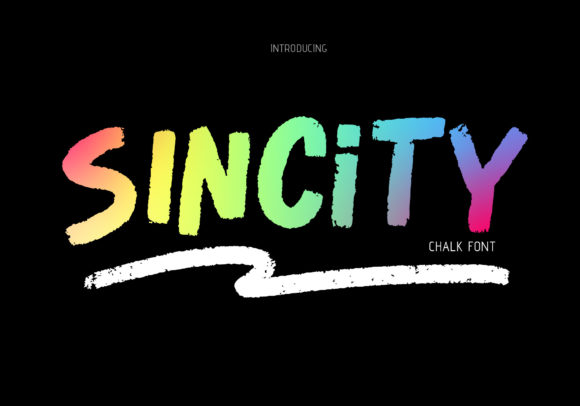
There’s something magnetic about a typeface that doesn’t try too hard but still commands attention. Sincity is exactly that kind of font—a chalked display typeface that carries the raw, unfiltered energy of street art. If you’ve ever walked through an alleyway and stopped to admire a mural or a stenciled phrase on a brick wall, you already understand the visual language Sincity speaks. It’s gritty, it’s bold, and it doesn’t apologize for being loud.
This isn’t a font for every project, and that’s precisely what makes it valuable. When you need something that feels authentic, a little rebellious, and unmistakably human, Sincity steps into the spotlight. It’s the kind of typeface that makes people pause mid-scroll, the one that gives a brand personality without saying a single word.
What Makes Sincity Stand Out
Sincity is a chalked display font, which means it carries the texture and imperfection of hand-lettered chalk art. The edges aren’t perfectly clean. The strokes have weight variation. There’s a tactile quality that digital fonts often lack, and that’s intentional. It feels like someone actually drew these letters, not a machine that rendered them pixel-perfect.
That handcrafted quality is what gives Sincity its street art vibe. It’s reminiscent of shop signs, concert posters, and guerrilla marketing campaigns. The font has weight and presence without feeling heavy or oppressive. It works beautifully at larger sizes—think headlines, logos, and signage—where its texture and character can really breathe.
What’s interesting about Sincity is that it manages to feel both nostalgic and contemporary at the same time. It nods to vintage chalkboard signage while feeling completely at home on a modern t-shirt design or a trendy café menu. That duality makes it surprisingly versatile for a display font.
Where Sincity Actually Works
Let’s talk about real-world applications, because that’s what matters when you’re choosing a typeface for a project. Sincity isn’t meant for body text or legal disclaimers. It’s built for moments where you need to make a visual statement.
Branding and Logo Design — If your brand personality leans toward the creative, the urban, or the artisanal, Sincity could be a strong foundation for your logo. Think craft breweries, streetwear labels, independent record shops, tattoo studios, or food trucks. The font communicates authenticity and craftsmanship without feeling corporate. Pair it with a clean sans serif font for contrast, and you’ve got a brand identity that feels grounded and approachable.
Merchandise and Apparel — This is where Sincity really shines. T-shirt designers love display fonts with texture because they add dimension to flat designs. Sincity’s chalked effect gives apparel graphics a worn-in, vintage feel that customers respond to. Whether you’re designing for a band, a lifestyle brand, or a limited-edition clothing line, this font brings instant character to merchandise.
Packaging Design — For products that want to feel artisanal or small-batch, Sincity works beautifully on labels, boxes, and wrapping. Imagine it on a hot sauce bottle, a craft coffee bag, or a handmade soap label. The chalk texture suggests something made with care, not mass-produced. It’s a subtle visual cue that influences how customers perceive quality.
Social Media Graphics — Instagram posts, Facebook banners, YouTube thumbnails, Pinterest pins—these platforms are visually noisy. You need something that cuts through the clutter. Sincity’s bold, textured lettering grabs attention in a feed full of clean, minimalist designs. Use it for quotes, announcements, sale graphics, or event promotions where you want to make an impact quickly.
Posters and Event Materials — Concert posters, festival flyers, gallery openings, pop-up shop announcements—Sincity was practically made for this. Its street art aesthetic fits naturally in contexts where creativity and culture collide. The font does half the design work for you, establishing mood and energy before anyone reads the actual words.
Websites and Blogs — While Sincity isn’t suited for paragraphs of text, it works well for website headers, blog post titles, and call-to-action sections. If you run a creative blog, a portfolio site, or an online store with a distinctive brand voice, using Sincity for headlines can tie your digital presence together with your other design assets.
Invitations and Editorial Layouts — For event invitations that need personality—think birthday parties, album launches, art shows, or themed dinners—Sincity sets the tone immediately. In editorial design, it can serve as a striking drop cap or section header that breaks up monotony and draws the reader’s eye.
Pairing Sincity with Other Fonts
One of the most practical things you can do with any display font is learn how to pair it effectively. Sincity has a lot of personality, so it needs balance. Pairing it with another bold, textured font would create visual chaos. Instead, let it be the star and give it a supporting cast that complements without competing.
A clean sans serif font like Montserrat, Lato, or Open Sans works well for body text alongside Sincity headlines. The contrast between Sincity’s rough, handcrafted texture and the clean geometry of a modern sans serif creates visual interest while maintaining readability.
If your brand leans more traditional or editorial, try pairing Sincity with a classic serif font. The juxtaposition of street art typography with elegant serif lettering can create a sophisticated tension that feels intentional and curated.
Script fonts can work too, but tread carefully. A flowing, elegant script paired with Sincity’s gritty texture can look intentional if both fonts share a similar energy level. A delicate, formal script might clash. Test your pairings in context—mock up actual designs rather than just looking at fonts side by side in a preview window.
Readability and Practical Considerations
Every creative font comes with trade-offs, and it’s worth being honest about them. Sincity’s chalked texture, while visually appealing, does affect readability at smaller sizes. If you’re using it for a headline at 48 pixels or larger, you’re in great shape. Drop it below 24 pixels, and the texture starts to compete with legibility.
This is standard for display fonts, and it’s not a flaw—it’s a design decision. Display typefaces are built for impact, not for reading paragraphs. Understanding that distinction helps you use Sincity where it performs best and choose a complementary typeface for everything else.
Before committing to Sincity for a project, test it in the actual context where it will appear. View it on a mobile screen if it’s going on a website. Print it out if it’s going on packaging. Look at it at arm’s length if it’s going on a poster. Real-world testing catches issues that font previews don’t show.
Also, take time to explore all the styles and weights included with the font family. Many premium fonts come with alternates, ligatures, or stylistic variations that give you more creative flexibility. You might find that a particular stylistic set works better for your specific project than the default characters.
Licensing and Commercial Use
If you’re planning to use Sincity for commercial projects—and given its applications, you probably are—make sure you understand the licensing terms. Most premium fonts come with different license tiers depending on how you intend to use them. A license for personal projects might not cover merchandise, client work, or large-scale distribution.
Read the license agreement before you start designing. Check whether the license covers the specific use case you have in mind. If you’re a designer working on client projects, verify whether the license transfers to your client or if they need their own. These details matter, and sorting them out upfront prevents headaches later.
Investing in a properly licensed commercial font also supports the designers who create these tools. Quality typeface design takes significant skill and time, and fair licensing ensures that creative professionals can continue producing the design assets that make our work stand out.
Making the Most of a Font Like Sincity
The best typography decisions come from understanding your project’s goals, your audience’s expectations, and the message you want to communicate. Sincity isn’t trying to be everything to everyone. It knows what it is—a bold, textured, street-art-inspired display font with real personality.
Use it when your project calls for authenticity and edge. Use it when you want to stand out from the sea of clean, corporate typography. Use it when your audience values creativity and individuality over polish and perfection.
The font you choose sends a message before anyone reads a single word. Sincity says you’re not afraid to be different, that you value craftsmanship, and that your brand has a voice worth noticing. For the right project, that message is exactly what connects with the people you’re trying to reach.