Fawne: The Beaded Typeface for Artisanal Branding
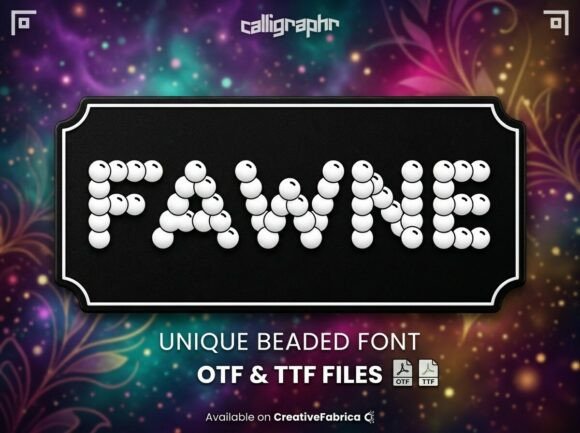
Imagine a font that feels like a string of perfectly formed pearls, each letter meticulously crafted to catch the light and hold attention. That’s the immediate impression of Fawne, a display typeface that transforms typography into tactile art. This isn’t just another decorative font; it’s a statement piece, built from a rhythmic pattern of 3D-shaded spheres that create a stunning “pearl string” effect. For designers and business owners in luxury spaces, it offers a direct path to communicating craftsmanship, prestige, and a touch of whimsical elegance in a single word or headline.
A Typeface with Built-in Texture and Dimension
What makes Fawne visually compelling is its inherent dimensionality. Each character is a small sculpture, composed of spheres that appear to be lit from a consistent source, creating soft shadows and highlights. This gives any text set in Fawne an immediate sense of depth and physical presence. Unlike a flat sans serif or a classic serif font, its heavy visual weight is achieved not through sheer thickness, but through this intricate, beaded construction. The result is a font that commands attention without shouting, perfect for projects where you want to convey value, detail, and a handcrafted sensibility. It’s a prime example of how a unique typeface can become the cornerstone of a brand’s visual identity.
From Jewelry Labels to Wedding Invitations: Where Fawne Shines
The practical applications for a font with this specific personality are both niche and powerful. Its connection to jewelry and beadwork makes it a natural fit for luxury branding. Picture it on a logo for a boutique jeweler, the masthead of a high-end fashion magazine, or the packaging for a premium skincare line. The font does the heavy lifting of communicating opulence and artistry before a single product description is read.
Beyond product branding, its elegance translates beautifully to event stationery. Wedding invitations, save-the-date cards, and menu headers for upscale events gain an instant layer of sophistication and bespoke charm. For digital creators, think of Instagram graphics for a luxury lifestyle blog, Pinterest pins promoting artisanal goods, or website hero sections for a bespoke tailor. The key is to use it where its detailed structure can be appreciated, typically in headlines, logos, or short display text, rather than in long body paragraphs.
Pairing Fawne with Other Fonts for Balanced Design
Given its strong visual personality, thoughtful font pairing is essential. Fawne works best as the star of the show—the primary display font for headlines and logos. To maintain readability and hierarchy, pair it with a clean, neutral typeface for body text. A simple sans serif font like Montserrat, Lato, or even a classic serif like Lora can provide a calm, readable foundation that lets Fawne’s intricate details stand out without overwhelming the viewer.
Avoid pairing it with other highly decorative, script, or handwritten fonts, as this can create visual clutter and confusion. The goal is contrast: the ornate, beaded display font against a simple, functional workhorse. This approach ensures your design feels curated and professional, not chaotic. Always test your pairings in context—see how they look on a mockup of a business card, a website header, or a social media post to judge the balance effectively.
Practical Considerations for Using a Display Font
Before integrating a creative font like Fawne into a commercial project, a few practical checks are necessary. First, review the license. Ensure it’s a commercial font that permits your intended use, whether for digital products, printed merchandise, or client work. Many premium fonts come with clear licensing tiers for different scales of use.
Second, consider readability at scale. While Fawne is designed for impact, its detailed beaded texture might become less distinct at very small sizes or on low-resolution screens. It’s best suited for larger applications where its craftsmanship can be fully appreciated. Always test it in the specific context where it will be used. Does the logo remain clear when scaled down for a favicon? Does the headline on a poster maintain its legibility from a distance? These are critical questions for effective design.
Finally, explore the full font family if available. Does it include alternate characters, stylistic sets, or multiple weights? Having these options can provide valuable flexibility, allowing you to customize the typographic voice for different projects while maintaining the core Fawne aesthetic. This kind of thoroughness is what separates good design from great, memorable branding.