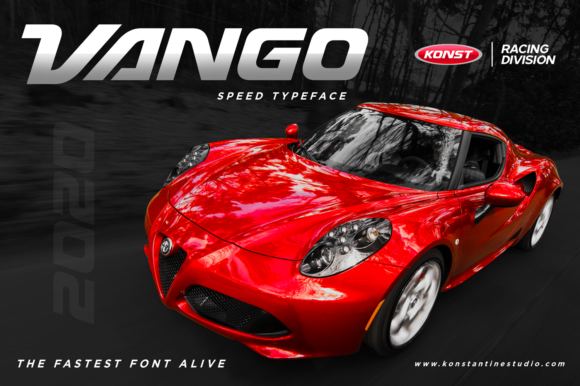
Vango: The Bold Typeface for High-Impact Visuals
There’s a particular challenge in design that many face: how to make a message feel urgent, powerful, and impossible to ignore. You’ve seen it in sports branding, fitness apparel, and action movie posters—where the typography itself seems to vibrate with energy. This is the exact space where Vango, a bold and thick lettered display font, excels. It’s not just another typeface; it’s a tool for injecting raw, visual momentum into a project. If your work involves conveying speed, strength, or high-octane excitement, understanding how to leverage a font like Vango can be the difference between blending in and standing out.
More Than Just Thick Lines: The Psychology of a Powerful Font
At first glance, Vango is defined by its heavy weight and assertive geometry. But its effectiveness goes deeper than its visual bulk. Fonts communicate personality before a single word is read. A light, airy script suggests elegance and whimsy; a clean sans-serif feels modern and approachable. Vango, with its unapologetically bold strokes, communicates confidence, stability, and intensity. It’s the typographic equivalent of a firm handshake or a starting pistol.
This makes it a premier choice for specific contexts. Think about the logos of athletic teams, the headers on a gym’s website, or the title treatment for an extreme sports documentary. In these scenarios, the font needs to do more than just label—it needs to embody the subject. Vango does this effortlessly. Its thick letterforms ensure maximum impact even at smaller sizes, which is crucial for things like app icons or social media profile pictures where clarity is paramount. When used in larger formats, like a billboard or event poster, its presence becomes monumental.
Practical Applications: Where Vango Truly Shines
Knowing a font’s personality is one thing; applying it effectively is another. The true value of a creative font like Vango is its versatility across different mediums, provided the project’s goal aligns with its inherent character. Here’s how designers, entrepreneurs, and creators are putting it to work.
For Branding and Logo Design: A logo is the cornerstone of brand identity. For businesses in fitness, automotive, tech startups with disruptive products, or even bold food brands (think energy drinks or robust coffee), Vango can form the foundational type. Its strength ensures the brand name is remembered. Pair it with a simple, geometric sans-serif for body text to create a balanced, professional system. This font pairing strategy ensures the display font grabs attention while the supporting text remains highly readable.
In Packaging and Editorial Design: On a crowded shelf, packaging has mere seconds to make an impression. Vango is ideal for product names on labels for performance gear, tools, or specialty goods that emphasize durability. In editorial layouts—like magazine covers or chapter headings in a book—it can create dramatic, engaging entry points that pull the reader in. It’s a classic choice for headlines in publications covering sports, action, or technology.
Dominating Digital Spaces: The digital realm is where Vango’s impact scales beautifully. For social media graphics, it ensures your key message—whether it’s a sale announcement, a motivational quote, or an event promotion—is instantly legible even on a small phone screen. On websites, it can be used sparingly for hero section headlines, calls-to-action, or section titles to guide the user’s eye and create a strong visual hierarchy. Bloggers and content creators can use it for featured image text or newsletter headers to establish a consistent, recognizable style.
Marketing Assets and Merchandise: From posters and flyers for a local 5K run to banners for a trade show booth, Vango commands attention. It’s equally effective on merchandise like t-shirts, hats, and stickers where the design needs to be simple, bold, and instantly understandable. For digital products, such as online course thumbnails or ebook covers, it provides a professional, authoritative look that can increase perceived value.
Integrating Vango Into Your Design Workflow
Adopting a new display font requires more than just liking its look. To use it effectively and maintain a professional standard, consider these practical steps.
First, review all included font styles and weights. A robust premium font family often includes variations—like Vango’s bold weight—which can offer subtle versatility within the same typographic family. Second, test font pairings rigorously. The power of a display font is best realized when contrasted with a simpler counterpart. Try pairing Vango with a neutral sans-serif like Open Sans or a classic serif like Georgia for body copy. The goal is harmony, not competition. Third, always prioritize readability. While Vango is designed for impact, ensure that any text set in it is legible at its intended size and in its final environment. Test it on different screens and in print proofs.
Finally, a crucial and often overlooked step: understand the commercial licensing. If you’re using Vango for client work, merchandise for sale, or any project that generates revenue, you must ensure you have the correct license. Using a font commercially without the proper license can lead to legal issues. Reputable foundries and font marketplaces are very clear about the terms for their commercial fonts, so always verify before finalizing a project.
The Limit is Your Imagination
Ultimately, a font like Vango is a catalyst. It provides a strong, visual voice, but the story you tell with it is entirely yours. It’s a design asset that can unify a brand’s visual language, make marketing materials more compelling, and give creative projects a definitive edge. By understanding its strengths—its ability to convey power, speed, and modernity—and applying it thoughtfully across your branding, digital presence, and print collateral, you move beyond decoration into strategic visual communication. The bold strokes are there; the direction they take is up to you.