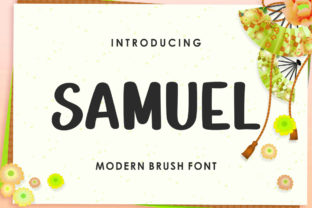
Samuel: A Modern Font That Feels Like a Friendly Handshake
You know that feeling when you meet someone and instantly feel at ease? That’s the vibe Samuel gives off. It’s not trying too hard to be edgy or overly formal. Instead, it strikes this perfect balance—modern, clean, and just a little bit playful. If you’ve been scrolling through font libraries looking for something that feels both professional and approachable, Samuel might be the quiet standout you didn’t know you needed.
What makes Samuel work so well is its minimalist elegance. The letterforms are simple, but not sterile. There’s a softness to the curves, a casual confidence in the spacing. It doesn’t scream for attention, but it holds it once you notice. Think of it as the font equivalent of a well-fitted linen shirt—effortlessly stylish without trying to impress.
A Font That Adapts to Your Project’s Personality
One of Samuel’s biggest strengths is its versatility. Because it’s a display font with a casual style, it can shift roles depending on what you’re working on. Need a logo for a boutique coffee shop? Samuel’s friendly curves make it feel warm and inviting. Designing packaging for an artisan skincare line? Its clean lines keep things looking polished without feeling cold. Creating social media graphics for a lifestyle brand? The font’s modern touch helps your posts feel current and relatable.
Samuel works particularly well for projects that need to communicate approachability. It’s not a script font that might feel too whimsical for serious contexts, nor is it a rigid sans serif that could come across as corporate. It sits in that sweet spot—modern enough for digital platforms, but with enough personality to stand out in print. If you’re building a brand identity from scratch, this kind of flexibility is invaluable.
Practical Applications That Go Beyond the Obvious
Let’s talk specifics. Where does Samuel actually shine? Start with branding. If you’re a small business owner crafting your visual identity, this font can serve as a primary typeface for your logo, business cards, and website headers. Its casual elegance makes it suitable for lifestyle brands, creative studios, or even personal blogs that want to feel curated but not stiff.
For packaging design, Samuel’s readability at various sizes is a major plus. Whether it’s on a product label, a shopping bag, or a box insert, the font stays clear and consistent. It pairs well with both serif and sans serif fonts for body text, giving you room to create hierarchy without clashing. If you’re designing merchandise—think tote bags, mugs, or t-shirts—Samuel’s minimalist style ensures it looks good across different materials and printing methods.
Digital applications are where this font really gets to play. On websites and blogs, it can be used for headlines and subheadings to break up text and guide the reader’s eye. Because it’s not overly decorative, it loads well and doesn’t distract from your content. For social media graphics, especially on platforms like Instagram or Pinterest, Samuel helps create a cohesive visual language. Use it consistently across your posts, and you’ll start to build recognition—your audience will associate that clean, friendly typeface with your brand.
Pairing and Practicality: Making It Work for You
Choosing a font is only half the battle. Knowing how to use it effectively is what makes the difference. When pairing Samuel with other typefaces, consider contrast. A classic serif font for body text can create a nice balance, letting Samuel’s casual style pop in headlines without overwhelming the page. Alternatively, a simple sans serif can keep things feeling modern and streamlined.
Readability is key, especially for longer text. While Samuel is a display font meant for shorter bursts of text, you can still use it effectively in editorial layouts—as long as you’re mindful of size and spacing. For example, in a magazine spread or a brochure, use it for pull quotes, section titles, or captions. Let a more traditional font handle the paragraphs.
Before committing to Samuel for a big project, test it in context. Mock up a logo, a social media post, or a webpage header. See how it looks with your color palette and imagery. Sometimes a font that looks perfect in isolation might not fit the mood you’re aiming for. Give yourself time to experiment.
Licensing and Long-Term Considerations
One practical note: always check the licensing. If you’re using Samuel for commercial projects—client work, products for sale, or marketing materials—make sure you have the right license. Many premium fonts come with different tiers for personal versus commercial use. It’s worth investing in the correct license to avoid legal headaches down the road. Think of it as part of your design budget, just like stock photos or software subscriptions.
Also, consider the font’s included styles. Does it come with multiple weights? Italics? Alternates? Having those options can extend the life of the font in your toolkit. A font with a regular, bold, and light version gives you more flexibility to create visual hierarchy without switching typefaces.
Building a Visual Language That Feels Authentic
At the end of the day, typography is about communication. The fonts you choose say something about your brand before a single word is read. Samuel, with its modern yet casual style, communicates friendliness, clarity, and a sense of ease. It’s not about being the loudest voice in the room—it’s about being the one people remember because it felt genuine.
Whether you’re a designer looking for a reliable display font, a small business owner building your first brand, or a content creator refining your visual style, Samuel offers a solid foundation. It’s the kind of typeface that doesn’t just look good—it feels right. And in a world where authenticity matters, that’s a quality worth choosing.
Take some time to explore how Samuel might fit into your next project. Play with pairings, test it in different contexts, and see how it aligns with the message you want to send. Sometimes, the right font isn’t the most complex or trendy one—it’s the one that feels like a natural extension of your voice.