Arabian Night: A Font That Dances Between Fantasy and Form
There’s a particular kind of magic in a typeface that doesn’t just sit on the page but seems to move. It’s the difference between a sign that informs and one that transports. If you’ve ever found yourself captivated by the silhouette of an ancient dome against a twilight sky, or the fluid, almost liquid lines of psychedelic art, you understand this pull. This is the space where Arabian Night lives—a display font that takes the sturdy, recognizable forms of traditional architecture and spins them through a modern, trippy filter. The result is a set of letterforms that feel both familiar and wonderfully strange, perfect for projects that need to make an unforgettable first impression.
More Than Just a Typeface: Understanding Its Unique Character
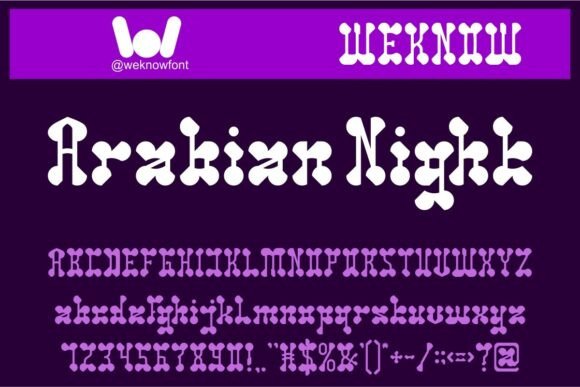
At its core, Arabian Night is a study in contrast and fusion. The letterforms are described as “bulbous” and fluid, a direct nod to the rounded silhouettes of minarets and domes. But this isn’t a historical revival font. The strokes are thick and undulating, the curves defy gravity, creating a rhythm that’s almost hypnotic. Imagine the bold weight of a premium display font meeting the playful, surreal energy of a concert poster from the 1960s. It’s this blend that gives the font its versatility. It carries a sense of legendary mystery and professional ingenuity, making it a powerful tool for anyone building a brand identity that needs to stand out in a crowded visual landscape.
This isn’t a font for body copy or lengthy paragraphs. Its strength lies in its impact at scale. Think of it as the headline act, the centerpiece that sets the tone. For a logo design, it can instantly communicate a brand’s core personality—be it exotic, luxurious, adventurous, or avant-garde. For a book cover, especially in fantasy or speculative fiction, it promises a story that’s epic and immersive. Its visual texture adds a layer of depth that simpler serif fonts or clean sans serif fonts can’t achieve, making it a valuable asset in a designer’s toolkit.
Practical Applications: Where This Font Truly Shines
The real test of any creative asset is how it performs in the wild. Arabian Night’s bold, decorative nature makes it a specialist, but a highly effective one. Here’s where you can put it to work:
- Branding & Logo Design: Ideal for businesses in hospitality (think exotic restaurants, boutique hotels), entertainment (theaters, event companies), or any brand wanting to evoke a sense of adventure, luxury, or fantasy. It creates instant brand recognition.
- Packaging Design: Perfect for specialty food products, artisanal spirits, or beauty lines that want a touch of opulence and intrigue on their labels and boxes.
- Editorial & Poster Design: Makes magazine covers, festival posters, and music album art impossible to ignore. Its energy is perfect for high-energy festival posters and experimental music branding.
- Digital Presence: Use it for hero sections on websites, impactful social media graphics, or as a standout header in digital products like online courses or downloadable guides. It’s a fantastic choice for blog headers that need personality.
- Print & Merchandise: From wedding invitations with a mystical theme to t-shirt graphics and merchandise, it adds a unique, artistic flair that people remember.
When using a font this distinctive, the key is intentionality. It should be the star of the show, supported by more neutral font pairings for readability. A clean geometric sans serif or a simple humanist serif can provide balance, letting Arabian Night’s headlines pop without overwhelming the viewer.
Smart Implementation: Tips for Using a Bold Display Font
Embracing a font like Arabian Night is exciting, but a strategic approach ensures it enhances rather than hinders your project. Here are some practical considerations from a design perspective:
Readability is Paramount. Because of its intricate, flowing shapes, this font is best used for short bursts of text—headlines, logos, subheadings. Never set a paragraph in it. Always test its legibility at the intended size and from a distance, especially for posters or signage. The goal is visual consistency that supports your message, not obscures it.
Match the Font to the Project Goal. Does your brand’s personality align with the font’s “trippy” and “exotic” vibe? A law firm probably isn’t the right fit, but a psychedelic art gallery, a magic-themed escape room, or a luxury travel blog focused on historic destinations could be perfect. The font should amplify your story, not contradict it.
Explore the Included Styles. Many premium fonts come with stylistic alternates, ligatures, or multiple weights. Check what’s included in your license. These extras can help you fine-tune the look, creating unique lockups for logos or varying the texture in a headline sequence.
Commercial Licensing Matters. If you’re using this for a client project, merchandise for sale, or a business asset, ensure you have the correct commercial font license. This is a non-negotiable part of using design assets professionally and protects both you and the font creator.
Crafting a Visual Identity That Tells a Story
Ultimately, typography is a silent ambassador for your brand. The fonts you choose are fundamental to your visual communication. A typeface like Arabian Night offers more than just letters; it offers an atmosphere, a mood, a promise of something extraordinary. It’s a tool for creative entrepreneurs, content creators, and marketers who understand that sometimes, the most effective way to connect with an audience is to give them something to feel, not just to read.
By thoughtfully integrating such a distinctive creative font into your work, you move beyond mere decoration. You begin to build a cohesive visual language that is instantly recognizable and deeply engaging. It’s about making deliberate choices that align with your narrative, ensuring every element—from the headline on your website to the logo on your packaging—works in concert to tell your unique story. In the end, the right font doesn’t just display words; it helps craft an experience. And in a world saturated with noise, that experience is what people remember.